0:00
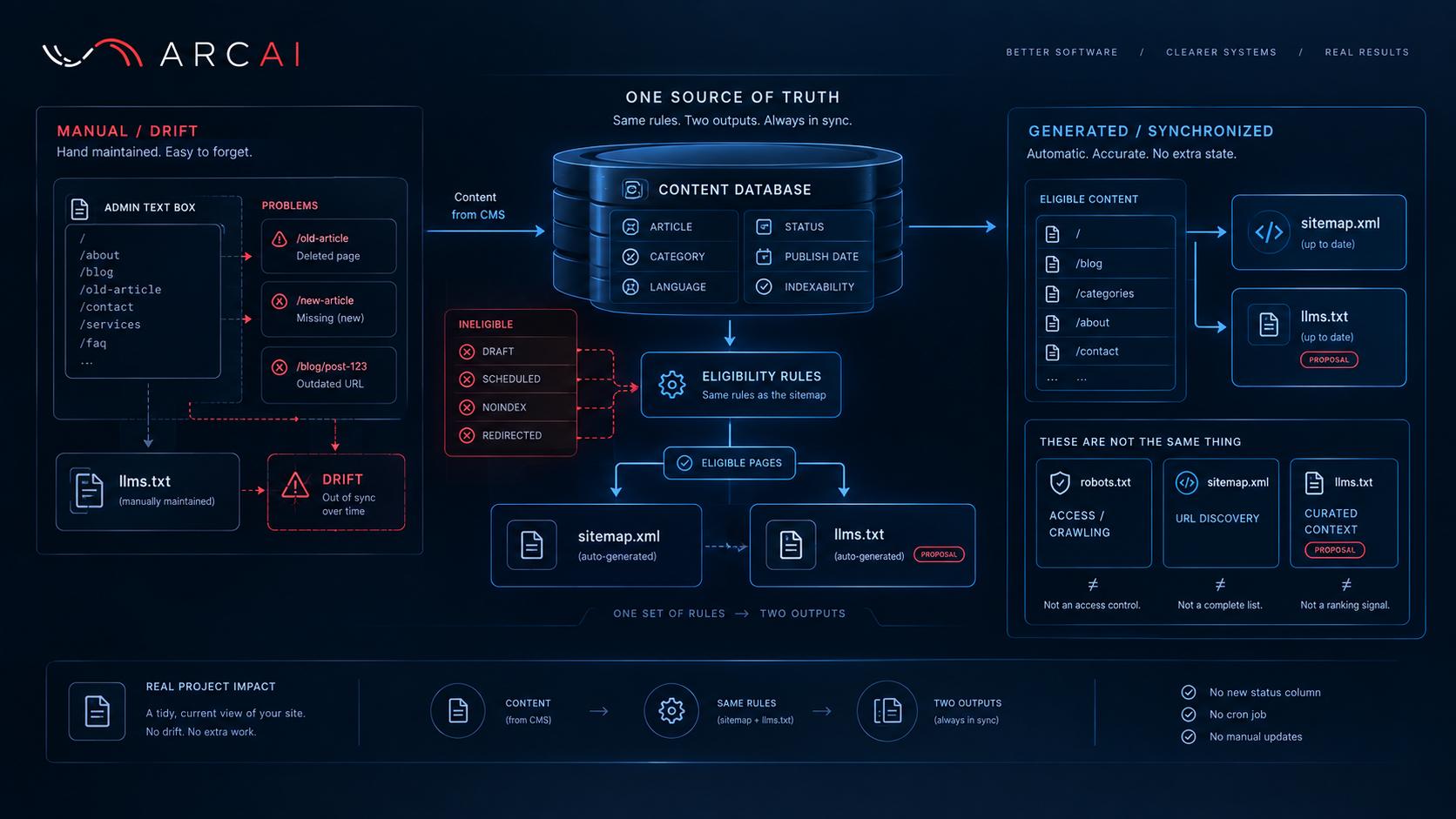
All right, let's get right into it. If you've been keeping an eye on the latest trends in AI crawlers, you've undoubtedly seen the chatter around a new file format called llms.txt. There are these sweeping claims floating around that it's the next frontier of AI search engine optimization, you know, the silver bullet for getting large language models to actually cite your website. But today, we're gonna cut straight through that industry hype. In this explainer, we're delivering a pragmatic engineering-first breakdown of what this file is, what it absolutely isn't, and most importantly, what it actually does today. Here's the roadmap for our explainer. We'll start by understanding the llms.txt file, then we'll separate myth from reality, dive into what it does today, look at the risk of data drift, and finally, we'll talk about building it the right way. Okay, section one, understanding the llms.txt file. Let's strip away the noise and establish a technical baseline. So, what are we actually looking at? Llms.txt is a proposed markdown file standard. It was introduced pretty recently on September 3rd, 2024, by Jeremy Howard, and it's designed to live right at the root of your domain. The whole idea is that it's meant to be read by both AI tools and human readers scanning it directly. But here is the crucial point to keep us grounded in reality. This is simply a proposal. There is no official governing body backing this file, there is zero formal versioning schedule, and there's no central authority you have to register with. At the end of the day, it is literally just a plain markdown file. Think of the layout like a pristine software specification document where your data paths are mapped out perfectly. A standard implementation opens up with your company's name and a very plain, clear description. Following that, you're only linking to the pages that really matter. We are talking about your core main pages, your newest twenty-five articles, and categories grouped nicely by language. And this is key, every link retains its original title. So a French page gets a French link title. It's incredibly tidy. Separating myth from reality. It is time to tear down some massive misconceptions surrounding this format. The absolute most common confusion we see is equating this to an existing protocol. First things first, llms.txt is fundamentally not robots.txt. This is absolutely crucial to understand. Unlike your robots file, llms.txt does exactly nothing to tell crawlers what they can or cannot fetch. It contains no directives whatsoever. It does not control access to your site, period. Furthermore, it is definitely not an XML sitemap. A sitemap is designed to be a completely exhaustive list of every single URL you want indexed, right? Well, in stark contrast, llms.txt is a highly curated, condensed summary. It's much closer to a short, direct elevator pitch handed to a machine reader rather than a comprehensive map of your entire site infrastructure.
2:50
So, here is the hard truth of the landscape as of September 2026. Despite all the buzz, no major AI platform has actually confirmed they read the thing. Google, they've explicitly stated that their AI overviews run on ordinary search signals, actually comparing llms.txt to the old outdated meta keywords tag. Yikes. And if you read the crawler documentation for OpenAI and Perplexity, they cover robots.txt thoroughly, but completely ignore llms.txt. Anthropic and Microsoft, no announced support either. But maybe the most damning evidence comes from an SE rankings test. They wanted to see if the file predicted which pages got cited by AI tools. Interestingly enough, dropping the file from their model actually made the model more accurate at predicting citations. That is a wildly blunt sign from the data that this simply isn't an AI SEO ranking signal right now. And when we look at the adoption data across roughly three hundred thousand domains analyzed by SE Ranking, we see that while adoption is real, it's incredibly patchy. Overall, only about one in ten sites had the file. Breaking it down, it sits at a mere eight percent for high-traffic sites and slightly higher at ten point five percent for mid-tier sites. So it's out there for sure, but it is a long way from being a universal standard. What it does today. If we strip away the myths, we need to uncover its actual utility.
4:17
So I pose this question directly to you. If this thing isn't moving your AI search visibility and the major models aren't formally acknowledging it as a ranking signal, what does deploying this file actually achieve for your architecture today? The answer is beautifully simple. Today, it provides a clean, readable, one-page curated summary of your business. That's it. It acts as a tidy current map of your site and where your most important pages live. When you strip away all that ranking hype, what you're left with is a highly accessible, condensed snapshot that perfectly explains your core business structure to both human eyes and any machine reader that happens to parse it.
4:55
Let's look at section four, the risk of data drift, because there are real architectural risks if you deploy this without a solid strategy. I love this quote because it brilliantly illustrates the core issue. The engineering team at Arc AI shared this direct anecdote. Arc AI's first llms.txt file lived in a text box in the admin panel, typed by hand, updated by nobody. And as a result, the address eventually just returned not found. It's a classic engineering trap, right? Manual data entry inevitably leads to abandoned chores. And that beautifully illustrates the mechanics of what we call data drift. When you try to maintain a file like this by hand, it drifts in two distinct ways. First, it starts listing pages that have since been deleted, redirected, or moved, which just creates dead paths. Second, it completely misses everything new that gets published the minute after someone last manually opened and saved that admin panel. Hand-kept files are a chore. And let's be honest, chores simply get skipped. You need clean structural mappings, not manual labor. So section five, building it the right way. Let's figure out the smartest architectural way to handle this without creating lingering technical debt. The fix to data drift isn't creating, you know, better calendar reminders for your content team. It's architectural. The Arc AI solution is incredibly elegant. One set of rules feeding two outputs. By generating your llms.txt file directly from the exact same eligibility rules that already build your sitemap, you literally solve the problem entirely. Think about it. A draft doesn't appear until it's published. A scheduled post waits for its proper date, and a no-indexed or redirected page drops out automatically. Because one set of rules feeds both the sitemap and the llms file, you ensure they cannot quietly disagree. And the performance cost of generating it this way, it is ridiculously cheap. On a site built with this architecture, generating the file on every request takes just 13 queries and exactly 37 milliseconds. From there, it gets cached for a day and clears instantly the moment something on the site changes. To put that into perspective, 37 milliseconds is practically nothing to maintain a perfectly synced, pristine business summary. Okay, mental screenshot time. Before you commit engineering time to this, here is an actionable checklist. One, decide if it's actually worth it for your stack. Remember, it's cheap if auto-generated, but a massive chore if kept by hand. Two, always generate it from your existing sitemap rules. Absolutely never maintain a separate list. Three, keep it strictly short and curated. This is not a URL dump. It's just your core pages. Four, put a plain, undeniable description of your business right near the top. And five, once it's finished, read it as a total stranger would to verify that it actually explains your business clearly. So, I'm gonna leave you with this final provocative thought to really examine your current infrastructure. Is your site architecture ready to elegantly auto-generate a pristine, unified business summary, or are you about to create just another manual chore that will inevitably be abandoned by your team? Look, llms.txt isn't some SEO magic trick, but handled pragmatically, it's a really solid auto-updating map of your digital presence. Thank you for diving into this explainer with me. Now, go check those internal systems. [upbeat music]